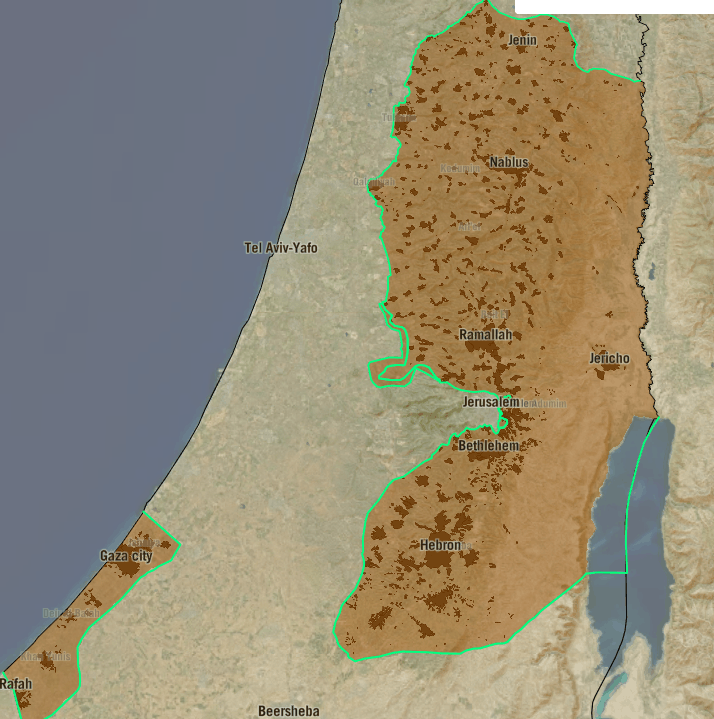
In June 1967 (the 1967 War) Israel occupied the West Bank and the Gaza Strip. In the two months following the war, Israel conducted a census in the Occupied Territories. According to the census, about 1,000,000 Palestinians were there at that time: some 660,000 in the West Bank and some 350,000 in the Gaza Strip. These figures exclude all 1967 Palestinian refugees who fled or were deported by Israel during or after the war.
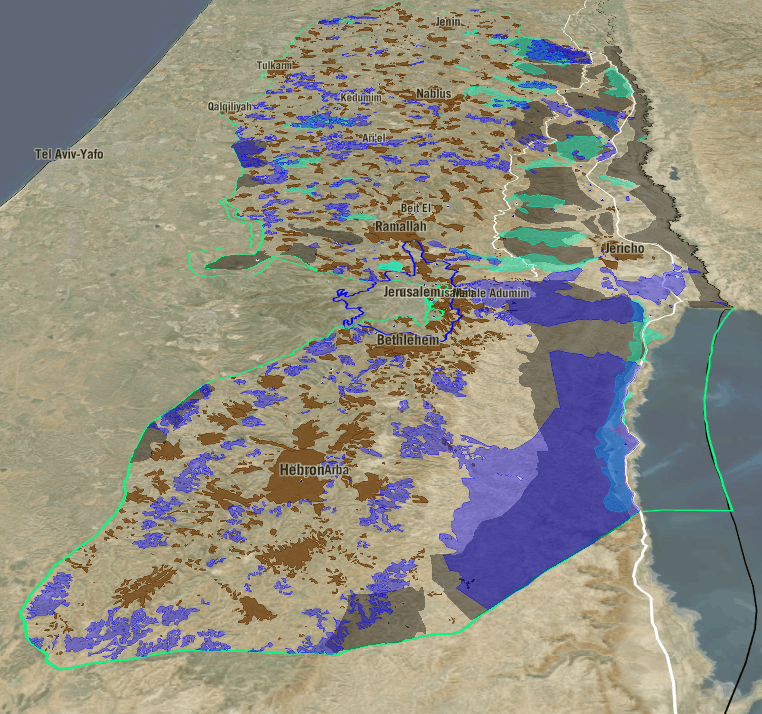
1979-92
Over the years Israel’s High Court of Justice has avoided addressing the issue of the illegality of settlements. Nevertheless, a ruling it handed down in 1979 made it difficult for Israel to continue building settlements on privately owned Palestinian land. To overcome this obstacle, the government came up with a new idea: declaring Palestinian land as ‘state land,’ which would make it possible to use the land to build settlements. By rewriting legal provisions and reinterpreting the existing laws, Israel introduced a fast track for declaring state land, which enabled applying this classification to lands that had been private or collective Palestinian property under both the British Mandate and Jordanian rule.
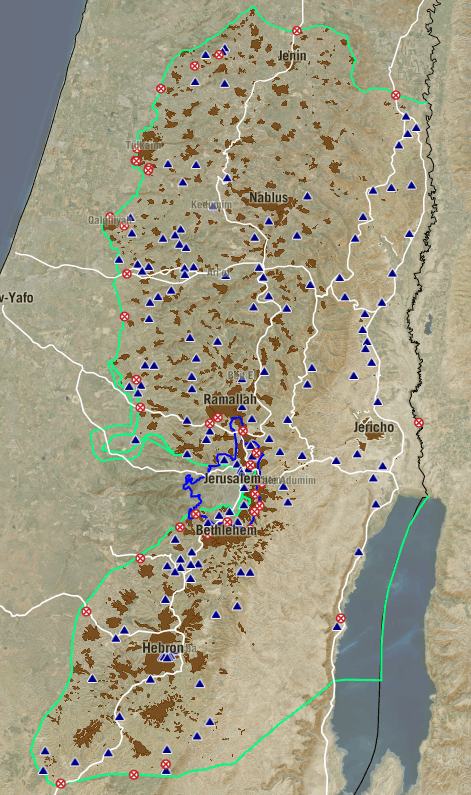
THE OSLO ACCORDS: DIVISION OF THE WEST BANK INTO AREAS A, B AND C From 1993 to 1995, the Israeli government and the Palestine Liberation Organization (PLO) signed the Oslo Accords. In 1994, under the Oslo I Accord, Israel withdrew its troops from Palestinian towns and refugee camps in the Gaza Strip, and from the West Bank city of Jericho. These communities were handed over to the ostensible control of the newly established Palestinian Authority.
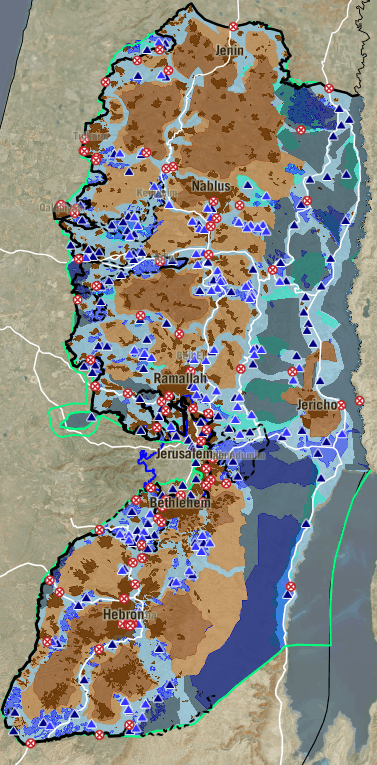
THE SEPARATION BARRIER In June 2002, the Israeli cabinet decided to construct the Separation Barrier. A key factor in determining the barrier’s route was the location of settlements, thereby laying the groundwork for the de facto annexation of 81 settlements (including the 11 neighborhoods built in East Jerusalem) and much land for their future expansion.
SOURCE:https://www.btselem.org/